Thursday, October 3, 2013

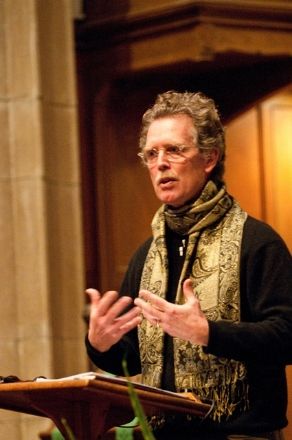
Anne Lamott at Prayer: Help

As we look forward to Anne Lamott's visit to St. Stephen's on October 17th-- more information is available by clicking here-- many of us are reading or re-reading our favorite of her books.

One of our staff's most beloved selections is her latest offering, pictured below:

Help Thanks Wow Summer Reading 2013 photo b8dd216b-3e38-4fe1-b0e3-05ab806bfec6_zpsa1ac0567.jpg

From her reflection on "Help:"

"There's freedom in hitting bottom, in seeing that you won't be able to save or rescue your daughter, her spouse, his parents, or your career, relief in admitting you've reached the place of great unknowing. This is where restoration can begin, because when you're still in the state of trying to fix the unfixable, everything bad is engaged: the chatter of your mind, the tension of your physiology, all the trunks and wheel-ons you carry from your past. It's exhausting, crazy-making.

Help. Help us walk through this. Help us come through.

It is the first great prayer."

For many it is no easy task to loosen the reigns, to admit feeling powerless, to reach out to others for aid. For others it may come more easily. Do you find it easy to either ask for or pray for help? Have you ever reached a place of "great unknowing?"

Wednesday, September 18, 2013

Jill McCorkle this Sunday in the Rector's Forum!

Join us this Sunday at 10:10 AM in the Rector's Forum to hear Jill McCorkle speak! Her most recent novel, Life After Life, was our all-parish summer read and is available in the Bookshiop @ St. Stephen's.

 photo e8f38361-2f56-47ae-9b95-3e4d5697acca_zpsace6c34b.jpg

After a summer of both getting to know and falling in love with her characters, we are thrilled to have a chance to hear her discuss the book in person. We hope to see you in the parish hall this Sunday morning!

Monday, August 19, 2013

Life After Life: Lessons of Love

Today we are joined by guest blogger Karen Orville, a parishioner at St. Stephen's.

I got so lost in the details and troubles of these characters' lives. What was the point of this story? Why are we reading about all these troubles when we each have a gracious plenty of our own? Why wasn't an "escape" reading recommended to take us away from all our life situations?

And then it hit me. The point of the story is exactly that: people trying to escape their life situations through various ways. It was the magnitude of the "various ways" that distracted me. However, an important focus of the story is how easily distracted we are. In my distracted state, I almost missed the beautiful, ironic, unexpected learning situation of one character being pulled from the jaws of death by a pair of jaws!

 photo a7e76881-f5f7-4f85-a97e-b38be4741a84_zps16c4dcee.jpg
sculpture by Paul Manship

Then I started paying attention to the author's use of animals in the story and was awakened to the idea of unconditional love demonstrated by these animals. Animals love. Animals love difficult people. Animals love difficult people in difficult situations (Tammy, Dollbaby). Animals love even when love is not returned (Harvey).

The author then, through the characters of Luke and Sadie, shows us how this love looks in the human/human interaction. Even though these humans (Luke and Sadie) have learned this type of love, their lives continue to have rough spots and difficult people. Yet they still chose to love, without waiting for the return of love or even the return of respect. We see Joanna learning this way to deal with life situations i.e., by loving. We see other characters with opportunities to learn this way (Abby, CJ, Stan, Rachel) with varying degrees of success and failure.

 photo 93c4064f-c98f-4fba-ac51-0c59109fa1e8_zps5b7b324b.jpg
sculpture by Gustav Vigeland

The point is that life happens and is going to happen. There is nothing that will change that scenario. The only true escape, or freedom, comes from not running, not avoiding, not controlling, or not expecting the absence of problems. Freedom comes from sitting with life and learning, each moment of each day, to love a little more like Jesus (the perfect love). Since this way of loving is a life- long learning experience, we must wake up to the opportunities and teachers God gives us along the way: a dog (a great example of love) , a Luke or a Sadie ( love in unexpected situations), an Emmaus Group, or even a difficult person. Then, as we keep learning to share our love with all, freedom happens when life happens. It's a mystery. As my friend says, "a beautiful, wonderful mystery.”

 photo 5cea77fc-d15c-4bcc-8113-4cfa83990d02_zps1959c3c5.jpg
detail of Madonna of Bruges by Michelangelo

Glory, be to you, O God,
For the grace of new beginnings
Placed before me in every moment and encounter of life.
Glory, glory, glory
For the grace of new beginnings in every moment of life.

--J. Philip Newell, from “Friday Morning Prayer” in Celtic Benediction

Friday, August 9, 2013

Life After Life: The Value of Connection

Today we are joined by guest blogger Rev. Matt Johnson, Associate Rector at St. Stephen's.

When we got a group of young adults together last summer to ask what they thought the church had to offer people in their 20s and 30s, the unanimous answer was “connection.” Although we have so many cool gadgets that help us stay connected, there’s a longing (one that I don’t think is unique to those in their 20s and 30s) for connections with others that go deeper than text messages and emails.

 photo text_messaging_adults_zps6fb38035.jpg

I loved reading in Life After Life of the interactions between Abby and Sadie and between Rachel and CJ. In both relationships there was a large age gap between the two characters – but that didn’t matter. These relationships were great gifts to the characters and helped them to thrive in difficult circumstances. When contrasted with Kendra, who was incapable of anything but superficial connections with others, the power of the timeless Abby/Sadie and Rachel/CJ bonds were all the more striking.

This summer I’ve been on the cook team for two Sunday suppers and have witnessed connections similar to those in Life After Life. While working together to prepare a meal, old and young alike shared stories with each other and experienced new connections. This is perhaps the greatest gift the church has to offer: opportunities to experience real and deep connections with others. It’s through these connections that we can experience a greater union with Christ, who is the balm for the great loneliness of our time.

Tuesday, July 30, 2013

Life After Life: The Rector Reflects

Today we are joined by guest blogger Rev. Gary Jones, Rector of St. Stephen's.

I loved this book, and I am grateful to our vicar, Weezie Blanchard, for suggesting it as our parish summer reading book. Jill McCorkle has given us a gift by taking us inside the hearts and minds of people in a retirement community in North Carolina. I loved the musings of the individual residents, as they pondered their lives and what mattered most to them. But I also always looked forward to reading Joanna’s notebook entries (sensitive reflections by a hospice volunteer who knew she was on sacred ground in appraising people’s lives). And the short, stream-of-consciousness musings of the dying themselves in the very last moments of their lives … these are sheer poetry. I was sorry when the book ended; I felt as if I were leaving good friends.

 photo lifeafterlifewords_zpsba486b4d.jpg

The range of characters and their life experiences is pretty amazing. From the little girl, Abby, who feels more at home in the Pine Haven retirement community than in her own dysfunctional home, to Kendra (Abby’s social-climbing, materialistic, and neurotic mother), to Rachel (the sharp, driven, professional woman from Boston), to Toby and Sadie and Stanley and C.J. … it’s hard not to love all of these people, and to feel for them in their private reflections. There’s a despicable villain or two, but even they help us reflect on the corrupting influences of wealth, power, and even religion.

One of the things I have cherished most about my role as a parish priest is the opportunity I’ve had to share in people’s innermost lives. Secret longings, deepest loves, anxious fears, hounding regrets…. By and large, people are not hesitant to share their victories and achievements with just about anyone. But that is just the tip of the iceberg of a human life, the little part that sticks out above the water line that anyone can see. There’s so much more to who we are that is submerged and hidden.

 photo 66049a84-d815-4efe-8c6c-4f3ee0ea963c_zps5a1ae1bb.jpg
Monk By the Sea by Leo de Fryne

Some of that hidden part we need to share with someone, and sometimes people choose to share it with a priest. After hearing people talk about some of their hidden lives, I’ve often reflected, either silently or aloud, that if we only knew more of the truth about each other, the world would be a much more compassionate place. All too often, we go around comparing our insides (the secret, interior truth about how we are really getting along in the world) with other people’s outsides (the apparent truth about how other people are doing).

The result, of course, is that we end up believing that other people are doing so much better than we are. Other people seem, on the outside, to be so much better put together, while we know, inside, that we are a mess – other people’s marriages are happier, their home lives are so much more fulfilling, their professional lives are more successful, and psychologically, everyone else seems so much more grounded and balanced.

I’ve often thought that, if only we knew the truth about each other, we’d probably all feel more normal and could relax a little more. We would also surely be more sympathetic, tender, and kind toward each other. It seems to me that Jill McCorkle’s way of taking us inside the hearts and minds of her characters and their life stories has just this effect. We feel deeply for Stanley when his tough-guy charade falls apart; Rachel’s disillusionment about her lover is heartbreaking; Sadie’s optimism and appreciation for the simple things of life are inspiring; C.J., though deeply wounded, nevertheless is spiritually resilient; and Abby’s childhood lens helps us to see ourselves in a new way, which is by turns hilarious and heartbreaking.

But much of the vast, submerged part of our lives remains hidden, not only from people we love most, our spouses and children, and from trusted confidantes like parish priests, but even from ourselves. And Jill McCorkle even manages to plumb the depths of these mysterious parts of her characters, at least indirectly, by giving us several different perspectives on each person – the characters’ own reflections on their lives, the reactions of the characters to one another, Joanna’s notebook entries from the last days and hours of a person’s life, and then the final, poetic stream-of-consciousness musings from the person at the time of death. It all amounts to complex, soulful, and tender portraits of people like ourselves, and people with whom we interact every day.

 photo 74573963-a189-4bd3-bfba-1ae629896384_zps3c1ec0c7.jpg\
The Windows of Heaven Are Open by Sook Jin Jo

In a way, the drama at the end of the novel distracted me from a deeper consideration of the richness of the various portraits throughout the book. But the ending does highlight how desperate longing, on the one hand, and excessive pride and inflated ego on the other, can lead to terrible tragedy and disgrace.

One of the effects of this novel for me anyway is that it helps me to remember that the complexity I sense inside myself – the beauty and wonder, as well as the corrupting ego and miserable failure – these and other complexities, born of very different experiences, are just as poignant inside all of the seemingly well-put-together people who are all around me every day. In the words of the Psalm, “we are fearfully and wonderfully made.” How important it is to avoid being judgmental; and how important it is to be patient and gentle with each other.

Friday, July 19, 2013

Life After Life: New Beginnings


Today we are joined by guest blogger Jack Deloyht, a parishioner at St. Stephen's
Everyone in Life After Life, with a couple of egregious exceptions, is someone I’d like to meet. They are sympathetic characters, of both wonderful and very human spirit. It would be interesting to know if it is really like this in a senior living facility. (I am not there yet but I suspect I ought to be.) I wonder if dying is like any of the instances described between the main segments of the story. I will be there in time and I suspect I’ll find out.
It is interesting to follow the back stories of each person profiled in the story, no matter how brief the segment given to a characterization. I feel as if pieces of these histories belong to my life.
Everyone in this novel moves to a new beginning, including those who die. There are also one or maybe two instances where the new beginning portends an unsalutary outcome. Each character travels there with personal conflicts, even when they are barely aware of them. This has helped my understanding of a recasting of the Lord’s Prayer presented by John Philip Newell in a wonderful little book entitled Ground of All Being, which has beautiful photographs of a Celtic Christian retreat center in New Mexico accompanying each line.
 
Newell recasts “Lead us not into temptation, but deliver us from evil,” replacing it with “Do not forsake us in our time of conflict, but lead us into new beginnings.” Reading Life After Life has given me insight as to why this recast may be a valuable and appropriate alternative version of the prayer.

 
Editor’s note: John Philip Newell, pictured above, is a frequent speaker here at St. Stephen's.The complete text of Newell’s contemporary version of The Lord’s Prayer may be found below.
Ground of all being,
Mother of life, Father of the universe,
Your name is sacred, beyond speaking.

May we know your presence,
may your longings be our longings in heart and in action.
May there be food for the human family today
and for the whole earth community.

Forgive us the falseness of what we have done
as we forgive those who are untrue to us.

Do not forsake us in our time of conflict
but lead us into new beginnings.

For the light of life, the vitality of life, and the glory of life are yours now and for ever.
Amen.

Friday, July 12, 2013

For Everything There is a Season

For everything there is a season, and a time for every matter under heaven:

a time to be born, and a time to die;

a time to plant, and a time to pluck up what is planted;

a time to kill, and a time to heal;

a time to break down, and a time to build up;

a time to weep, and a time to laugh;

a time to mourn, and a time to dance;

a time to throw away stones, and a time to gather stones together;

a time to embrace, and a time to refrain from embracing;

a time to seek, and a time to lose;

a time to keep, and a time to throw away;

a time to tear, and a time to sew;

a time to keep silence, and a time to speak;

a time to love, and a time to hate;

a time for war, and a time for peace. Ecclesiastes 3: 1-8, NRSV

 photo bb9d2c1e-07ad-44c5-9010-a34d46cceb26_zpsb6d9ec99.jpg Gathering Stones by Robert McGregor, 1877

In many ways, Life After Life is a book about reviewing a life, taking stock of what was, and laying claim to it-- good and bad. We all hope to be able to recognize the particular seasons of our lives, and to be able to respond accordingly. There is an echo of this desire in the Lord's Prayer, when we pray to be given our daily bread.

How do the characters in the book fight against their season of life? How do they embrace their circumstances?

How do you?